I am very excited to announce that I will be heading over to New York in July to compete at the Cheese-Monger Invitational - a type of competition for cheese-mongers. 3 Aussies will be competing: myself, Claudia Bowman and Anthony Femia. Challenges include blind tastings, cutting, wrapping, assembling cheese plates etc.
More details to follow soon.
New York - here I come!
Wednesday, June 1, 2011

Tuesday, May 24, 2011
Whisky & Cheese - a cure for winter chills
Hi All
Wow - buying a house and moving takes up A LOT of time...consequently I haven't posted any new blog entries for a really long time – sorry about that.
At the moment I am preparing for some upcoming cheese and whisky tastings – a couple of private events in the next month, then a couple of public ones coming up in October.
Whisky and cheese matching is becoming really popular – and it’s really not surprising that they work so well together – whiskies exhibit notes of dried fruit, nuts, citrus, salty crackers and cured meats: all foods that are traditionally served with cheese. Whisky has none of the acidic tannins found in wine, which so often clash with the acidity naturally present in cheese.
On this note, I thought I would provide some cheese and whisky matching hints and tips – winter is a great time to stay in and experiment with your favourite drams and a great cheese board.
Goat’s Cheeses
Not necessarily the first food that comes to mind when thinking whisky, but goat’s cheeses are a delightful partner to delicate, floral whiskies such as Lowlands styles and also some Kentucy Bourbons. Look for semi-matured cheeses with a wrinkly mould such as Holy Goat La Luna from Victoria, or Brunet from Italy. Some harder styles also work well, such as Garrotxa from Spain or a Tomme de Chevre from France. This is a lovely combination to enjoy before dinner, because it creates such a light and refreshing sensation on the palate.
Bries and Camemberts
A lot of people enjoy Bries and Camemberts with classic Highland styles, but for me it this combination can be a bit hit and miss. These types of cheeses mature so quickly, they can be very different from day to day, season to season. It is particularly important to make sure your cheese isn’t over-ripe, as sometimes the ammonia can combine with certain notes in whisky to create an unpleasant metallic hotness in the mouth. If you do want to try this match, find a good French brie and experiment with whiskies with soft fruit notes and a full, round mouthfeel. If you are finding unpleasant notes coming through, try just eating the soft interior of the cheese, and giving the rind a miss.
Washed Rind Cheeses (a.k.a ‘the stinkies’)
These pungent cheeses are a great match with most whiskies and Bourbons, particularly any with a well-developed sweet note – look out for mentions of vanilla, desserts, rich dried fruits or chocolate in the whisky tasting notes. Taleggio, Milawa King River Gold and Epoisses are all great choices. These cheeses will also match well with lightly peated and coastal style whiskies.
Cheddars
Full flavoured, matured cheddars are great matches with full flavoured peaty whiskies like those from Islay. It really is a case of the bigger the whisky, the bigger the cheese – you really need a well-developed cheddar tang to offset the rich peat and slight saltiness in the whisky.
Hard Cheeses
There is something divine about a sherried whisky matched with a good quality Parmigiano Reggiano which has been matured for at least 24 months – a heady mix of salty-sweetness, dried fruit and roasted nuts – the perfect aperitif! Simply put out a big wedge of parmigiano and let your guests chisel off bite-size chunks as you serve drinks. Dutch Gouda, French Mimolette (a bit like an aged Edam), and Gruyere are also great partners to any whiskies that have been matured in ex-sherry and/or bourbon casks and have a rich fruity and floral note.
Blue Cheeses
As a general rule, blue cheeses are firm friends with coastal and peaty malts. You could quite easily have an entire tasting session devoted to these partners in crime – there is something about the match of spicy blue mould mingling with salty smoke that just can’t be beaten. However, generalisations can be dangerous, and just as whiskies vary in their flavour intensity, so do blue cheeses – some are mild and creamy, and some will just about knock your socks off. This can be amplified further when you match a peat monster with a big blue cheese – the results can be literally breathtaking. To begin with try Blue de Laqueuille from France, or an Italian Gorgonzola Dolce (a milder style) – both cheeses are medium strength and have a nice balance of spiciness and cream. When you feel ready to ‘go all the way’ try Roquefort (a very strong French sheep’s milk blue) with Ardbeg Uigeadail – it lives up the old cliché of ‘an iron first in a velvet glove’ and is a match I never grow tired of.
Hopefully this gives you a few ideas to start with – you may even like to keep a little whisky and cheese diary with notes about your matches. Remember to have fun in your experimentations and always ask your local cheese-monger for help and advice when selecting your cheeses.
Sunday, February 20, 2011
Gold Fever - Royal Sydney Cheese Show
Now that the results for the Sydney Royal Cheese & Dairy Produce Show have been officially announced, I can blog about it.
I always look forward to the show – a chance to taste cheese all day long, hang out with other cheesey people, and see what cheese-makers around the country are up to – new products, improvements since last year etc.
However it is also a day of mixed emotions. It is particularly heart-breaking when some of the cheeses you love and sell all-year around are not at their best on judging day. It happened this year for both Holy Goat La Luna (first year without a gold medal), and Bangalow Nashua (only a silver this year, but a gold for their Triple Cream).
Also, I know a lot of people are critical of the whole show/judging system – with comments along the following lines ‘how can you judge a ricotta next to a hand-made, cloth-bound cheddar – it’s not fair’, ‘how can a show that accepts entries for commercial cottage cheese take itself seriously’ etc.
In order to throw my 2 cents in, I will briefly outline the Show for you:
The Royal Agricultural Society has been judging dairy products for over 150 years. Any dairy products made in Australia are eligible to enter – from small artisan products, to mass-produced, supermarket products.
All entries are split into categories: fresh goat’s, white mould goats, cow’s milk ricotta, mild cheddar, semi-matured cheddar, vintage cheddar etc – there are about 50 classes, so like is judged against like and there are particular expectations for each category.
All entries are scored out of 20 points:
4 points presentation
6 points texture
10 points aroma and flavour
16 to 17.9 pts is a silver medal, 18 – 20 is gold.
All judges are from the industry and are suitably qualified via experience and/or training via a specific dairy products sensory evaluation course. A small team of 3 or 4 judges are assigned to judge specific categories on the day. Judging is done individually and in silence, then scores are averaged at the end to get an overall score for each entry.
At the end of the day, certain high-scoring cheeses from different categories are pitted against each other for various awards such as Champion Fancy Cheese, Champion Cheese etc. In these instances, it is possible for a ricotta to be ‘in the running’ against a cheddar.
On the day I judged the following categories:
- ricotta (both fresh and baked)
- cottage cheese (uncreamed, creamed and flavoured)
- cow’s milk washed rind
- cow’s milk mixed rind
- cow’s milk hard cheeses (parmesans, pecorino’s etc)
- innovation
I had many ‘judge’s conundrums’ on the day (particularly trying to judge Australian ‘parmesans’, when I usually only eat Parmigiano Reggiano – but that is a whole other blog post). Here is one example:
early morning session - Cottage Cheese class:
Gherkin-flavoured cottage cheese:
Presentation – as it should be, even surface, nicely presented etc
Texture – great, couldn’t really find any faults. Even curd pieces with a great texture, evenly distributed in a creamy dressing
Flavour – a beautiful cottage cheese, with a very good gherkin flavour that was true and very nicely balanced.
Result – gold medal for mass-produced, gherkin-flavoured cottage cheese
late morning session – Washed rinds
Bangalow Nashua:
Presentation - good, no apparent faults
Texture – rind slightly grainy, interior good
Flavour – a little disappointing: more ammonia on the rind that you would expect, and a touch of bitterness on the palate, a few unpleasant flavours from the rind – minor faults, still a pretty good cheese overall, but not a gold medal entry.
Result – silver medal for Bangalow Nashua
Sigh.
This was disappointing, but all I can say is this: According to the scoring criteria, the gherkin cottage cheese was almost faultless, while the Nashua entered on the day had some small, but obvious faults. I spent a few years working for one of Australia’s biggest dairy companies, and believe me – the production team there took just as much pride in producing quality products as small cheese-makers do. Why shouldn’t they get a gold for an amazing cottage cheese? I honestly feel that excellence should be rewarded in any area appropriate, and constructive feedback given for all entries in an attempt to try and raise the standard for the whole industry. We won’t get anywhere rewarding mediocrity.
NB – not that I am saying Nashua is mediocre, quite the opposite – a silver medal is a great result, I happily eat and sell this cheese regularly... Trying to choose my words carefully here… some people think that we should support all artisan cheese-makers simply because they are small and artisan, even if they make a sub-par cheese, and I just don’t agree. The cheese has to be good. Full Stop.
OK. Moving on…cheese shows are so contentious!
Highlights of the day:
- 2 great entries in the fetta category – Small Cow Farm Fettice, and Highland organics Fetta
- Generally a good standard in the washed rind category
- Some great entries from Milawa this year – 3 silver medals for King River Gold, Capricornia and their goat camembert (I find Milawa to have variable quality, so it was good to see so many good entries from them this year – keep up the great work guys!)
- Berry’s Creek blue cheeses – gold medals all around
- Bangalow Triple cream – hopefully we will get some in store soon
Disappointments:
- Holy Goat cheeses not up to their usual standard, resulting in stunned silence from all judges on the day. I hope this isn’t a sign of things to come now that their cheeses are starting to be distributed to Coles supermarkets
- No Barossa Valley cheeses – I would have loved to see the new Geo there
- Unfortunately no golds for Woodside – but lots of silvers. Also a very mysterious entry in the ‘innovation’ category – described as a ‘leaf-wrapped triple cream’ which was not leaf-wrapped, nor innovative in any way that I could see…
- A couple of entries with foreign matter – hairs, fibres etc
I also conducted some cheese & wine matching tutorials at the RAS Cellar Tasting on Saturday. The classes sold out quickly and everyone who attended was really attentive. The line up on the day was: Goat’s cheese & Sauvignon Blanc (a mix of Capra Allegro, Holy Goat La Luna and Woodside Edith), Milawa Capricornia with Pinot Grigio, Small Cow Farm Brie with Pinot Noir, Ashgrove vintage cheddar with Cabernet Sauvignon and finally Berry’s Creek Tarwin Blue with Moscato – which seemed to be the highlight of the class.
Tuesday, January 25, 2011
Cheese & Wine matching tutorials - Saturday 19th February
To all Cheese & Wine lovers
I will be presenting a couple of cheese & wine matching tutorials at the 2011 Sydney Royal Wine Show Cellar Tasting, held at Sydney Olympic Park on Saturday 19th February (I presented a couple of classes last year and they were really popular).
The Cellar Tasting is a great event – tickets are $65 and include unlimited tastings of over 2,300 wines and FREE wine judging tutorials, as well as other classes and tutorials – like my cheese & wine matching tutorial, which is an extra $15.
Earlier that week I will be judging at the Sydney Royal Cheese Show, and will select some medal-winning cheeses and pair them up with some great wines from the Macquarie Group Sydney Royal Wine show.
During the cheese & wine matching tutorial I will talk about cheese judging, how to match cheeses & wine and also how best to prepare cheese platters and store you cheese at home etc.
For more details and to book tickets, click here.
Thursday, January 13, 2011
Happy New Year!
A new year - that means 365 more days of cheese eating!
Having survived Christmas (the busiest time of the year for cheese retailers), I am having a short break but will be back with 2 new entries soon: a review of the RAW MILK C2 from Bruny Island, plus a review of Cambray Sheep cheeses from W.A. Stay posted later this month.
Having survived Christmas (the busiest time of the year for cheese retailers), I am having a short break but will be back with 2 new entries soon: a review of the RAW MILK C2 from Bruny Island, plus a review of Cambray Sheep cheeses from W.A. Stay posted later this month.
Thursday, December 9, 2010
Update from Bangalow Cheese Co.
Ah - a day off, finally! And that means time to update my blog. In a lazy attempt to make the most of my day off, this blog was pretty much written for me by Justin from Bangalow Cheese. A while ago he upgraded his pasteuriser and I asked him a few questions about the process. His answers are below - plus his reflections on the Australian cheese market, and some interesting insights into the issues that small cheese-makers face on a daily basis. (sorry - no pics this week!)
Is the new pasteuriser up and running? Are you pleased with it?
It is up and running and so far I am very pleased with it! It has surpassed my expectations in terms of operation and efficiency. It was a bit of an unknown as we didn’t just buy an off-the-shelf model. I wanted a very simple, manually operated set-up (most are very automated, programmable, ‘set-and-forget’ types, but I want to do it manually). I like being more involved, monitoring closely, opening and closing valves by hand. We also use a closed loop system for the water in our jacketed vat.
How much more milk will you be able to process with the new pasteuriser?
The previous pasteuriser was 150 ltr capacity, the new one is 900 ltr. We used to do 3 or 4 runs a week with the old one (averaging 500 ltrs per week). We now deal with about double the quantity of milk, but all in one day of cheese-making!
This has meant some serious changes to the way we do things, for example, we now make 8-10 cheese types all at the time, instead of maybe 2 or 3 at a time.
This is a challenge with timing things right and keeping on top of what stage each cheese is at during the making process.
It does however make things more efficient, as we can concentrate on one aspect of the business at a time – we used to be making cheese, washing Nashuas, turning cheese, cutting and wrapping cheese all at the same time. We now can just concentrate solely on making cheese on our cheese-making day.
We also obviously have the capacity to add more days of making if and when we want/need to. Don’t be fooled into thinking I have more time off!! Even with just one ‘make day’ a week, it’s still a 6-7 day week for me – there is a lot more to do when you perform every aspect from collecting the milk, making, maturing, wrapping, packing, delivering and selling at the market and all the bookwork – and that doesn’t even include the cheese-making classes and workshops I conduct!
How do you pasteurise? (High temp short time, or low temp longer time/batch
pasteurise?)
Batch pasteurise at the lowest temperature I’m legally allowed – 63 degrees C and hold for 30 minutes.
Why?
There are lots of different perspectives/opinions on this, but for me it is critical to treat the milk as gently as possible. I want to maintain the natural integrity of the milk as much as I can, and there are 2 main areas of focus in this regard. One is pasteurising – the higher the temperate, then more naturally present flora, enzymes, vitamins and minerals are destroyed, as well as denaturing the milk.
Two is handling – the more rough the handling, the more the milk becomes denatured. Milk for cheese-making is best unhomogenised, and any unnecessary agitation will break up fat globules, effectively homogenising. The less denatured the milk, the better the textures and flavours of the cheese.
We try and maintain the natural character of the milk as much as possible. We collect the milk straight from the cows while it is still warm, rather than collecting milk that has been cooled to less than 5 degrees. We avoid excessive pumping – the only time the milk is pumped is at the dairy – everything else is done by hand or gravity.
How long did it take to install? Were there any problems / issues?
I expected it to take about a week to install – so we allowed 2 weeks. Unfortunately it blew out to 5 weeks! We literally ran out of cheese (and we had even made extra for cover us for the 2 weeks). It was always going to be a challenge to get the 900 ltr vat up the hill – the factory is perched on a hill, accessed by a very pot-holed gravel road, followed by a ‘drive-way’ on the property that is just a dodgy dirt track.
With our very high rainfall, dirt track becomes slippery mud, lovely creek becomes flooded torrent! The truck that delivered the vat was a semi-trailer that couldn’t get in, so our expensive new equipment was dumped in the paddock! This was thankfully quite easily overcome by a second, more sensible truck with a crane.
The biggest problems were incorrect equipment being freighted. After everything was finally ready for the plumber to start installing, he arrives as we find that the gas hot water boiler is ‘Natural Gas’ when we needed and ordered ‘LGP Gas’. ARGHH!! Everything stops until we can get a replacement sent from Sydney. It arrives the following week, we wait for the plumber to be available, he does his bit and says he now needs the sparky to connect the pump.
When the electrician arrives, we discover that the pump is 3 Phase Power, which we don’t have – we ordered Single Phase, but they sent the wrong one. ARGHH AGAIN! It all stops while we wait again. I won’t bore you with further detail, but this same pattern continues, with incorrect items delivered from 4 different suppliers. Is it obvious I am a little bitter? No – I am over it now – steep learning curve, and stressful…if we aren’t making cheese, we have no income, but still all the bills.
With the increased capacity, do you have plans for any new cheeses?
Yes! Lucky local farmer market shoppers have been the guinea pigs for my ongoing ‘recipe development’. I have been working on a couple of hard cheeses over the course of the last 3 years – with hard cheese it takes a long time if you are developing our own cheese. The period between making the cheese and then tasting is longer, so tweaking and adjusting your recipe or method is a longer process. One new cheese is our ‘Newrybar’ semi-hard – a natural rind, loosely based on some of the swiss styles. It has a creamy texture and a slightly nutty, sour character. For a different spin, we are also trialling cumin seeds added to this cheese. The other new one we are making is our ‘St Helena Italo’. Again with a natural rind, this cheese is great for both the table and grating, and has a character reminiscent of the Romano-style. We also have a peppercorn Italo and Chilli Italo.
You may notice I refer to ‘styles’. One of my biggest challenges is overcoming the hurdle of consumers comparing to recognised styles. We are trying to develop our own cheeses that ‘break the mould’ so to speak (yes, a ‘cheesey pun). Whilst we may use a ‘style’ as a starting point, we develop out own recipes and methods of making and maturing. We don’t want to make a ‘Stilton’ or an ‘Emmenthal’ – we want to make our own, not copy others. The difficult part is that consumers want to liken it to something they know or recognise.
Is this your first (or rather second) step in conquering the world of cheese?
YES, DEFINITELY!
No…I don’t really need to conquer, I just want to be on the battleground. It is amazing to be doing what I love and still be in business after 3 years. It’s even more amazing to have achieved such recognition for what we do – to receive 2 Championship Awards at the Sydney Royal this year for our Nashua washed rind is just huge!
I also love that Australia is at an interesting time in cheese. We have some very talented cheese-makers out there, some potential regulatory movement, and it seems some growth in the number of boutique cheese-makers. When we started 3 years ago, we were the first and only ones in the Northern Rivers – now there are 3 of us! Also, annual cheese consumption is rising slowly but surely. Food in general is higher on the agenda with an increase in consumer awareness and a desire to know more about it – where it comes from, how it is produced, and the story behind it.
Hopefully out of this, consumers will soon start to value Australian artisanal products more – I’m amazed at the price buyers will happily pay for industrial imported cheese at the exclusion of boutique Australian cheese. There are some great Australian cheeses out there that are as good as, if not better than some of the imports. Whilst we have some allies (or Ali’s!), cheese-makers alone cannot change this – we need help from restaurants, retailers and distributors as well!
Sunday, November 14, 2010
'Whey-cation' to Marrook Farm, NSW
Hi all – to make up for my recent lack of posts here is a REALLY LONG one covering my visit to Manning Valley cheeseries.
Last week I popped up to Coffs Harbour for a couple of days to help a friend open her new gourmet deli (I believe the first of its kind in Coffs). If you are heading up that way check it out – Pansabella Providores on cnr of Park Ave and Little St opposite Woolworths.
On my way back to Sydney town I took a few days to visit some local cheese-makers. First off, a quick stop by Comboyne Culture. I have never tasted their cheeses before, although some of my customers have mentioned them cheese to me. Ron the cheese-maker took a bit of time out of his day to take me through his cheeses and give me a quick tasting. He makes 4 soft cheeses and one hard blue which was quite interesting – Thone River Blue (I bought some and will let you know all about it in a future post when I crack it open – plus more on Ron and his cheeses). In the meantime, their website is www.comboyneculture.com if you are interested.
Then it was off to Marrook Farm, where I was going to make cheese, milk cows and stay overnight to remind myself about what incredibly hard work it is to be a farmhouse cheese maker. David and Heidi (yes, she is Swiss) run Marrook Farm – an organic and bio-dynamic farm with about 50 Ayrshire cattle. It’s what I call the ‘quadruple whammy’ even though David and Heidi wouldn’t have it any other way:
1. Cheese making = hard work in itself
2. Farming = exceptionally hard work
3. Organic = extra layer of complexity (or simplicity I guess, depending on how you look at it)
4. Bio-dynamic = see notes for 3.
David and Heidi make amazingly delicious yogurt and 2 swiss-style cheeses – a Tilsit called ‘Brinawa’ and a gruyere style called ‘Bulga’ – both named after local regions. David had kindly invited me to stay with them on the farm overnight.
I arrived about 11 am to find David in the make room finishing pasteurisation in preparation for a small batch of Brinawa. He would normally start a bit earlier, but the recent heavy rains had washed out the road between the dairy and the cheese factory, so he had to repair that before he could transport the milk across.
As he tested the milk and added cultures and rennet, David explained he had recently taken a bit of a break from cheese-making as he had found it difficult to secure wholesale customers for his cheese. Buoyed by some non-confirmed orders, he had made a lot of cheeses, then got stuck with them when the orders fell through. I could tell he was a bit pissed off, and understandably so - when you run a farm, you have to milk the cows every day and then find ways to sell this milk. The last thing you want is big cheeses sitting around, slowing becoming over-ripe. Even thought I don’t work for the shop in question, I felt partially responsible seeing as I was the only cheese retailer in the room…
When the cheese sales fell through, he and Heidi focussed their efforts on their successful yogurt business. But he is back in the ‘cheese-saddle’ now because he loves to make cheese – but he is just making small batches at the moment (cautiously).
As the curd was washed and stirred, David took out a little bit for a cheese experiment – a small, smear ripened cheese with caraway seeds. I tasted one of the previous experimental batches, and even though David wasn’t happy with it, I thought it was damn delicious – reckon it has serious potential.
The curd was put into the large tilsit moulds from Switzerland, and then of course the masses and masses of washing up and cleaning began (David reckons cheese making is 90% washing up, and I am inclined to agree with him). We turned the cheeses a few times throughout the early afternoon, then left them in peace (it was at this point that David also generously shared his small lunch with me, as I hadn’t bought any provisions of my own).

Then back to the house for an impromptu tasting of David’s cheese and some discussion around how he should approach wholesalers/retailers considering he has absolutely no marketing experience what-so-ever. Due to his cheese-making hiatus, we only had some ‘reject cheeses’ to taste – David wasn’t particularly proud of them, but I still think they would have taken out a medal at the Royal Sydney. The 'reject' Brinawa was a bit oversalted, but still hints of rich cream and grassy pastures shone through. The Bulga was AMAZING – a true mountain cheese, and I personally thought it was a damn side better than most of the imported Swiss Gruyeres I have tasted lately. Both had obviously been very well cared for during maturation - regularly rubbed with brine and turned, creating a lovely rind.
Following some reflection of the difficulties of cheese wholesaling when you are a lone farmer, we headed out to the pastures to set up a temporary fenced area for the cows that night, David charging up and down hills with me puffing along behind him in Wellies and trying to carry the fencing poles. As we walked David explained some of the pastures to me and we munched each one – chicory, clover and rye grass – they were all pretty tasty. The pastures reminded me of the super-lush ones I saw in France, it really is ‘cow heaven’ (David’s term for the rich organic and bio-dynamic pastures he carefully cultivates). Words can’t describe how beautiful the pastures were, and I was kicking myself I didn’t bring my camera. Anyways, fencing duties completed it was time to check on the afternoon milking (undertaken by David’s son and another worker), a quick inspection of the recently repaired bridge, and then back to the house for dinner – a big thanks to Heidi for cooking a delicious pasta even though she was seriously under the weather.
About 7:30 pm we headed back to the cheesery to turn the cheeses again and put them to bed for the night safely tucked up in their moulds. We returned to the house, and I collapsed into bed, exhausted.
The next morning David was up early grinding grain for the milking, then at about 5:30 we were both off to the milking shed in the pouring rain, me in my old clothes seeing as I ‘was probably going to get shit all over me’ as David so eloquently put it. Lucky, thanks to David’s watchful gaze, I managed to avoid most of the shit (but not all) as I struggled attaching and detaching the milking cups from the cows. As I fumbled about I think the cows realised I was a novice and started to kick and sway around a bit – not an easy job! David was very patient with me and even managed to capture me 'in action' with my camera.
These have got to be some of the most contented cows around, and David just loves them – calling each by their name and telling me about each one. For farmhouse cheese-makers, this connection to the land and their animals is central to their being. The thought of making cheese with milk from animals they didn’t know, or didn’t personally care for is pretty much out of the question. Basically, healthy land = healthy animals = top quality milk = excellent cheeses / yoghurts – and they are aware of every stage in the cycle. For me, this is the case study for raw milk cheese – single heard, organic, farmhouse cheese. (NB: Other examples of organic farmhouse cheeseries include Holy Goat and Grandvewe).
After the milking we chatted about the farming industry in general and David expressed his concern about the demise of small, local farms and the limited number of farmhouse cheese-makers in general. It is getting harder and harder for small farmers to survive – most of them keep going simply because they love it. And as David pointed out, it is really expensive for new/younger people to set up a small dairy farm, plus with an exhausting schedule of 365 days a year, where’s the incentive?
He is also very concerned about ‘who will feed his grandkids’ – which is a sentiment I think we can all identify with as we see an increasing number of imported foods, grocery monopolisation and declining ‘small farms’.
Pondering this, we drove the tractor back to the house for brekky – again prepared by Heidi despite her flu. Plus some more chats about the retail cheese scene in Sydney and the current review of raw milk cheese being undertaken by FSANZ – the craziness of not letting small farmhouse cheeseries have the choice to make raw milk cheese with the milk from their own animals seeming all the more illogical after I had observed the care taken with the morning milking.
I had to head off around midday, so that meant I could still spend a bit of time in the cheesery in the morning. We unmoulded the Brinawas and brined then. David also brushed the little smeared-ripened ‘experiments’ and gave me some samples. And of course more cleaning.


Loaded up with cheese and yogurt, I headed back down the mountain and back onto Sydney, reflecting on my time there. For me – it was back to the shop, for David – the same daily cycle 7 days a week, 52 weeks a year.
The new baches of Brinawa will be available early next year – David said he will let me know when. Hopefully we will be able to get some into Formaggi Ocello and spread the word – I will keep you posted.
Everytime I visit a cheese-maker like David I am reminded of 3 things:
1. This is bloody hard work!
2. Despite this – the cheese-makers are generally a happy bunch, smiling their way though the relentless daily farm duties, cheese making and cleaning
3. All the cheese makers I have ever visited have been so generous with their time and so patient with me – I can’t believe they just let me jump straight in to the cheese making process.
CONCLUSION: We all need to support Aussie cheese-makers, and particularly farmhouse cheese-makers all year round – not just when the mood takes us! There are a lot of Aussie cheeseries now making bloody good cheese – so no excuses for not buying it. Yes - I acknowledge that there are still some average cheeses out there...but do what you can to support the good ones.
For more pics, visit my Manning Valley picasa album. Unfortunately – during cheese-making and milking it is really difficult to stop and take a photo, but I did manage to snap off a few more. Also even though this blog is long, there are so many details I didn’t include – I just hope I did justice to Marrook Farm’s amazing set-up and products.
Last week I popped up to Coffs Harbour for a couple of days to help a friend open her new gourmet deli (I believe the first of its kind in Coffs). If you are heading up that way check it out – Pansabella Providores on cnr of Park Ave and Little St opposite Woolworths.
On my way back to Sydney town I took a few days to visit some local cheese-makers. First off, a quick stop by Comboyne Culture. I have never tasted their cheeses before, although some of my customers have mentioned them cheese to me. Ron the cheese-maker took a bit of time out of his day to take me through his cheeses and give me a quick tasting. He makes 4 soft cheeses and one hard blue which was quite interesting – Thone River Blue (I bought some and will let you know all about it in a future post when I crack it open – plus more on Ron and his cheeses). In the meantime, their website is www.comboyneculture.com if you are interested.
 |
| Ron Lindsay at Comboyne Culture |
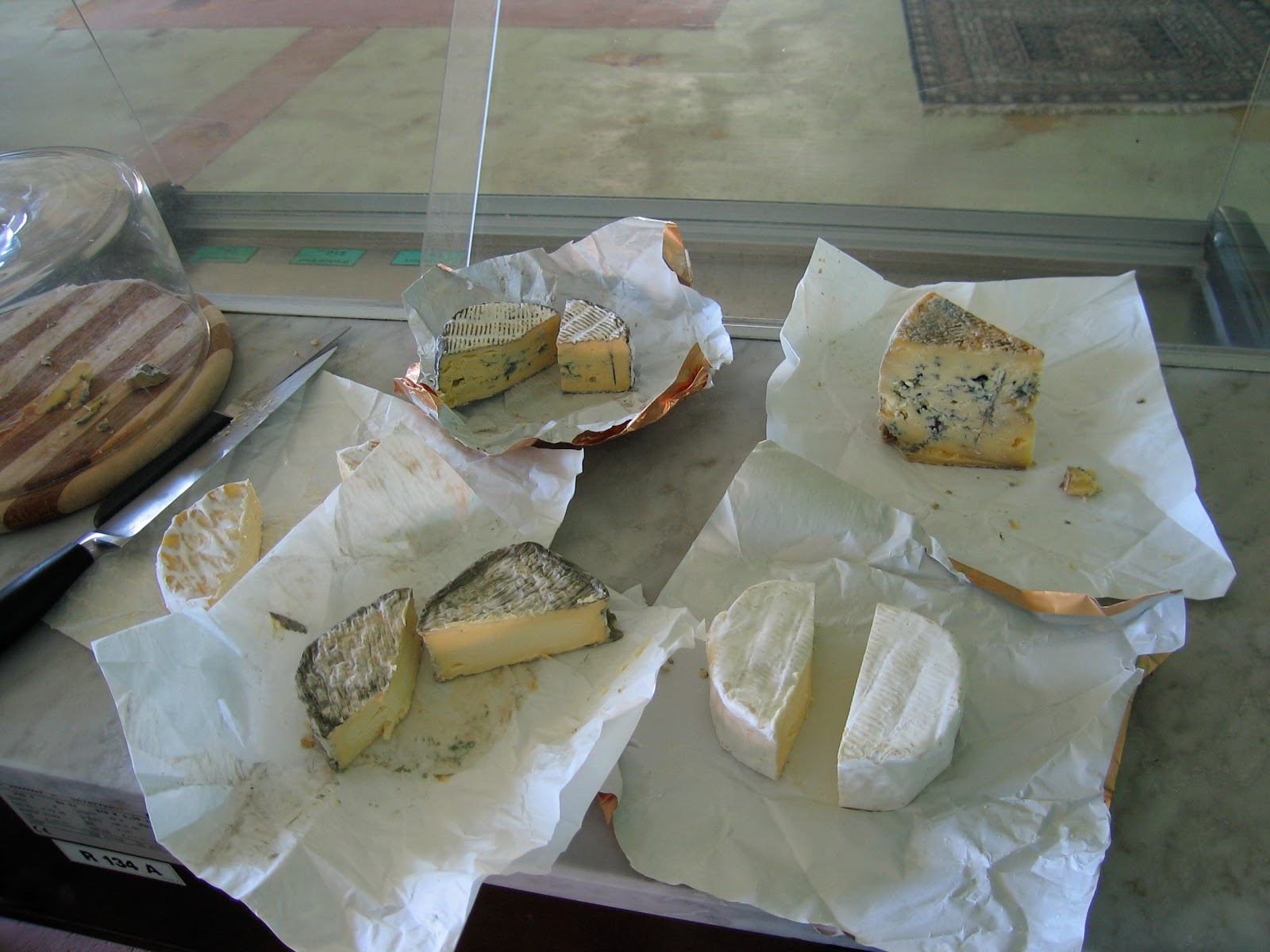 |
| Comboyne Culture Cheeses: clockwise from left: washed rind, bluembert, camembert, Thone River Blue, Lindsay Blue. |
Then it was off to Marrook Farm, where I was going to make cheese, milk cows and stay overnight to remind myself about what incredibly hard work it is to be a farmhouse cheese maker. David and Heidi (yes, she is Swiss) run Marrook Farm – an organic and bio-dynamic farm with about 50 Ayrshire cattle. It’s what I call the ‘quadruple whammy’ even though David and Heidi wouldn’t have it any other way:
1. Cheese making = hard work in itself
2. Farming = exceptionally hard work
3. Organic = extra layer of complexity (or simplicity I guess, depending on how you look at it)
4. Bio-dynamic = see notes for 3.
David and Heidi make amazingly delicious yogurt and 2 swiss-style cheeses – a Tilsit called ‘Brinawa’ and a gruyere style called ‘Bulga’ – both named after local regions. David had kindly invited me to stay with them on the farm overnight.
I arrived about 11 am to find David in the make room finishing pasteurisation in preparation for a small batch of Brinawa. He would normally start a bit earlier, but the recent heavy rains had washed out the road between the dairy and the cheese factory, so he had to repair that before he could transport the milk across.
As he tested the milk and added cultures and rennet, David explained he had recently taken a bit of a break from cheese-making as he had found it difficult to secure wholesale customers for his cheese. Buoyed by some non-confirmed orders, he had made a lot of cheeses, then got stuck with them when the orders fell through. I could tell he was a bit pissed off, and understandably so - when you run a farm, you have to milk the cows every day and then find ways to sell this milk. The last thing you want is big cheeses sitting around, slowing becoming over-ripe. Even thought I don’t work for the shop in question, I felt partially responsible seeing as I was the only cheese retailer in the room…
When the cheese sales fell through, he and Heidi focussed their efforts on their successful yogurt business. But he is back in the ‘cheese-saddle’ now because he loves to make cheese – but he is just making small batches at the moment (cautiously).
As the curd was washed and stirred, David took out a little bit for a cheese experiment – a small, smear ripened cheese with caraway seeds. I tasted one of the previous experimental batches, and even though David wasn’t happy with it, I thought it was damn delicious – reckon it has serious potential.
The curd was put into the large tilsit moulds from Switzerland, and then of course the masses and masses of washing up and cleaning began (David reckons cheese making is 90% washing up, and I am inclined to agree with him). We turned the cheeses a few times throughout the early afternoon, then left them in peace (it was at this point that David also generously shared his small lunch with me, as I hadn’t bought any provisions of my own).

Then back to the house for an impromptu tasting of David’s cheese and some discussion around how he should approach wholesalers/retailers considering he has absolutely no marketing experience what-so-ever. Due to his cheese-making hiatus, we only had some ‘reject cheeses’ to taste – David wasn’t particularly proud of them, but I still think they would have taken out a medal at the Royal Sydney. The 'reject' Brinawa was a bit oversalted, but still hints of rich cream and grassy pastures shone through. The Bulga was AMAZING – a true mountain cheese, and I personally thought it was a damn side better than most of the imported Swiss Gruyeres I have tasted lately. Both had obviously been very well cared for during maturation - regularly rubbed with brine and turned, creating a lovely rind.
Following some reflection of the difficulties of cheese wholesaling when you are a lone farmer, we headed out to the pastures to set up a temporary fenced area for the cows that night, David charging up and down hills with me puffing along behind him in Wellies and trying to carry the fencing poles. As we walked David explained some of the pastures to me and we munched each one – chicory, clover and rye grass – they were all pretty tasty. The pastures reminded me of the super-lush ones I saw in France, it really is ‘cow heaven’ (David’s term for the rich organic and bio-dynamic pastures he carefully cultivates). Words can’t describe how beautiful the pastures were, and I was kicking myself I didn’t bring my camera. Anyways, fencing duties completed it was time to check on the afternoon milking (undertaken by David’s son and another worker), a quick inspection of the recently repaired bridge, and then back to the house for dinner – a big thanks to Heidi for cooking a delicious pasta even though she was seriously under the weather.
About 7:30 pm we headed back to the cheesery to turn the cheeses again and put them to bed for the night safely tucked up in their moulds. We returned to the house, and I collapsed into bed, exhausted.
The next morning David was up early grinding grain for the milking, then at about 5:30 we were both off to the milking shed in the pouring rain, me in my old clothes seeing as I ‘was probably going to get shit all over me’ as David so eloquently put it. Lucky, thanks to David’s watchful gaze, I managed to avoid most of the shit (but not all) as I struggled attaching and detaching the milking cups from the cows. As I fumbled about I think the cows realised I was a novice and started to kick and sway around a bit – not an easy job! David was very patient with me and even managed to capture me 'in action' with my camera.
 |
| Out into the dark, rainy morning we go. |
 | ||
| David rounding up the cows - they were reluctant to leave 'cow heaven'. |
 |
| Cows heading up to dairy. |
 |
| Milking stalls. |
 |
| Me trying to milk a cow. Sorry cows! |
These have got to be some of the most contented cows around, and David just loves them – calling each by their name and telling me about each one. For farmhouse cheese-makers, this connection to the land and their animals is central to their being. The thought of making cheese with milk from animals they didn’t know, or didn’t personally care for is pretty much out of the question. Basically, healthy land = healthy animals = top quality milk = excellent cheeses / yoghurts – and they are aware of every stage in the cycle. For me, this is the case study for raw milk cheese – single heard, organic, farmhouse cheese. (NB: Other examples of organic farmhouse cheeseries include Holy Goat and Grandvewe).
After the milking we chatted about the farming industry in general and David expressed his concern about the demise of small, local farms and the limited number of farmhouse cheese-makers in general. It is getting harder and harder for small farmers to survive – most of them keep going simply because they love it. And as David pointed out, it is really expensive for new/younger people to set up a small dairy farm, plus with an exhausting schedule of 365 days a year, where’s the incentive?
He is also very concerned about ‘who will feed his grandkids’ – which is a sentiment I think we can all identify with as we see an increasing number of imported foods, grocery monopolisation and declining ‘small farms’.
Pondering this, we drove the tractor back to the house for brekky – again prepared by Heidi despite her flu. Plus some more chats about the retail cheese scene in Sydney and the current review of raw milk cheese being undertaken by FSANZ – the craziness of not letting small farmhouse cheeseries have the choice to make raw milk cheese with the milk from their own animals seeming all the more illogical after I had observed the care taken with the morning milking.
I had to head off around midday, so that meant I could still spend a bit of time in the cheesery in the morning. We unmoulded the Brinawas and brined then. David also brushed the little smeared-ripened ‘experiments’ and gave me some samples. And of course more cleaning.


Loaded up with cheese and yogurt, I headed back down the mountain and back onto Sydney, reflecting on my time there. For me – it was back to the shop, for David – the same daily cycle 7 days a week, 52 weeks a year.
The new baches of Brinawa will be available early next year – David said he will let me know when. Hopefully we will be able to get some into Formaggi Ocello and spread the word – I will keep you posted.
Everytime I visit a cheese-maker like David I am reminded of 3 things:
1. This is bloody hard work!
2. Despite this – the cheese-makers are generally a happy bunch, smiling their way though the relentless daily farm duties, cheese making and cleaning
3. All the cheese makers I have ever visited have been so generous with their time and so patient with me – I can’t believe they just let me jump straight in to the cheese making process.
CONCLUSION: We all need to support Aussie cheese-makers, and particularly farmhouse cheese-makers all year round – not just when the mood takes us! There are a lot of Aussie cheeseries now making bloody good cheese – so no excuses for not buying it. Yes - I acknowledge that there are still some average cheeses out there...but do what you can to support the good ones.
For more pics, visit my Manning Valley picasa album. Unfortunately – during cheese-making and milking it is really difficult to stop and take a photo, but I did manage to snap off a few more. Also even though this blog is long, there are so many details I didn’t include – I just hope I did justice to Marrook Farm’s amazing set-up and products.
 |
| Marrook Farm yogurt - keep an eye out for it. |
Subscribe to:
Posts (Atom)